Streetwear in 2024 is no longer just about stacking oversized pieces and limited sneakers. The segment is undergoing a maturation phase where urban dress codes clash with new regulatory constraints, particularly regarding environmental claims, and where the line between street fashion and classic wardrobe becomes difficult to delineate.
Anti-greenwashing regulation and sustainable streetwear: what is changing concretely
Most articles on streetwear trends mention eco-responsible fashion as a given. Few address the legal framework that will redefine what brands are allowed to claim.
The directive (EU) 2024/825, adopted in February 2024, directly targets vague environmental claims. Terms like “eco-friendly,” “green,” or “biodegradable” become illegal if the brand cannot prove them through a certified label (EU Ecolabel, for example) or verifiable public data. Full enforcement is scheduled for September 27, 2026, but brands are already adjusting their communication.
For streetwear, the consequences are direct. “In-house” labels (those small pseudo-ecological logos created by the brands themselves) will be banned if they do not rely on an official certification scheme. Promises of “carbon neutrality” based solely on carbon offsetting are explicitly targeted.
Several urban brands that have built their image on a green promise without solid certification will need to rethink their positioning, including on catalogs available on urban-fashion.fr where the “sustainable fashion” filters are likely to evolve.
Oversized cuts and streetwear silhouettes: where do we really stand
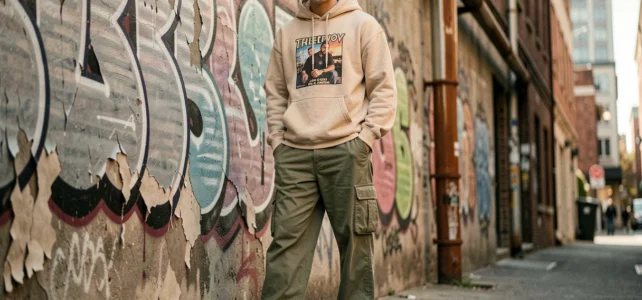
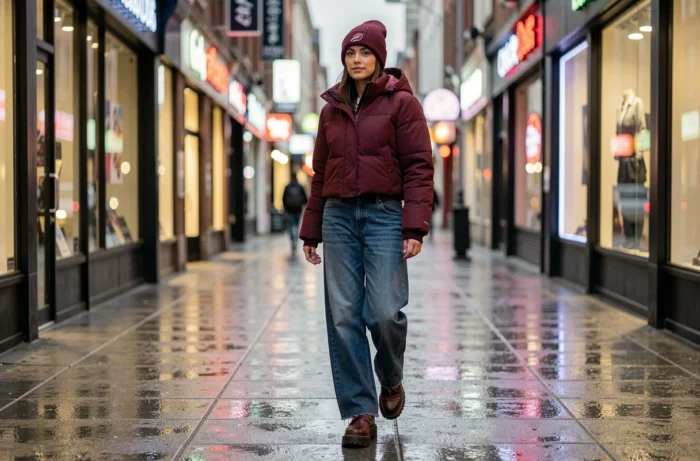
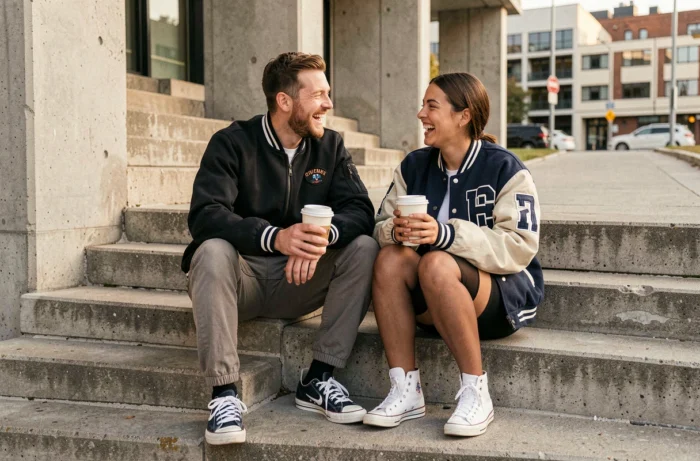
Loose cuts remain omnipresent. Oversized hoodies, cargo pants, bulky bomber jackets: the oversized silhouette has dominated urban collections for several seasons. However, the oversized trend is becoming more structured than before.
The pieces are no longer simply “too big.” Brands are working on dropped shoulders with sharper finishes and stiffer materials that hold their shape. The result is a loose look without the sloppy effect that characterized the early oversized waves of the 2010s.
What deserves attention is the coexistence of two approaches in the streetwear wardrobe:
- Deliberately oversized pieces, inherited from skate and hip-hop culture, worn to signify cultural belonging
- “Relaxed fit” cuts, closer to classic wardrobes, that borrow comfort from streetwear without adopting the most extreme proportions
- Technical layering (t-shirts under open shirts, hoodies under light jackets) that creates volume without relying on a single oversized piece
The distinction between these three approaches helps build a coherent urban look rather than a random assembly of loose clothing.
Sneakers and streetwear accessories: the pieces that structure an urban look
Sneakers remain the foundation of streetwear style. Collaborations between brands and artists continue to generate highly sought-after limited collections. Chunky models have not disappeared, but lower and sleeker silhouettes are gaining ground.
This shift reflects visual fatigue. After several years of oversized soles, part of the streetwear audience is returning to more understated lines, inspired by the archives of the 1990s. Retro models from Nike, Adidas, or New Balance fuel this trend without the chunky styles disappearing entirely.
On the accessories side, the cap remains a strong marker of the urban look. Structured models (like trucker or snapback) coexist with deconstructed, more discreet caps. Crossbody fanny packs and thick-framed sunglasses complete the wardrobe.
An accessory cannot compensate for a poorly thought-out outfit. The coherence between the proportions of the top, bottom, and shoes matters more than the accumulation of trendy pieces. An oversized hoodie works better with tapered pants than with equally wide bottoms, unless the desired effect is deliberately maximalist.
Graphic patterns and 90s heritage in streetwear 2024
Bold graphic prints and large logos have been a common thread for several seasons. References to the 1990s (thick typography, contrasting colors, vintage logos from historical brands) fuel a significant part of the collections.
The retro heritage blends with current printing techniques: sublimation on technical fabrics, voluminous embroidery, laser-cut appliqués. The result goes beyond mere nostalgia. Graphic pieces function as identity markers in streetwear culture, where wearing a logo or pattern signifies aligning one’s style with a specific universe.
Field reports diverge on this point: some believe that graphic overload saturates the market, while others see it as the logical continuation of a visual culture born in the streets. Streetwear has always been a medium for graphic expression before becoming a commercial segment, and this dimension endures in 2024.
- Wide graphic print t-shirts, worn tucked into high-waisted pants or left loose, remain accessible entry pieces
- Jackets and hoodies with embroidery or sewn patches add depth without falling into total graphic looks
- Collaborations between streetwear brands and graphic artists or graffiti artists give rise to limited-edition pieces that function as collector’s items
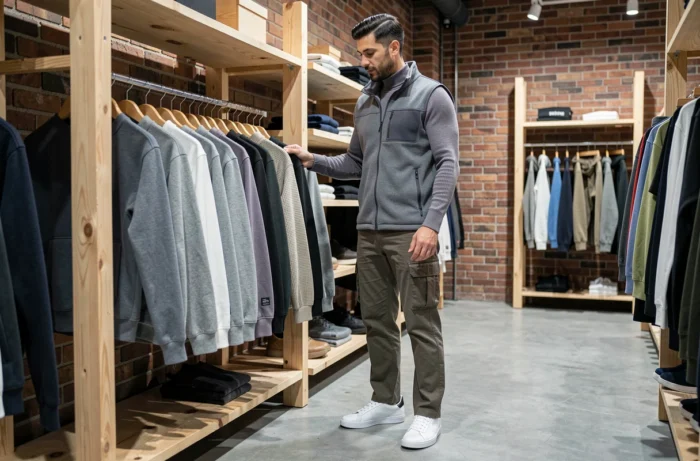
Urban style in 2024 is built on a balance between cultural heritage and new constraints. European regulation on green claims will reshuffle the cards for brands that relied on unverified eco-responsible positioning. Silhouettes are evolving towards more structure in volume. Sneakers oscillate between maximalism and a return to minimalism. The common denominator remains the coherence of the look rather than the accumulation of isolated trends.