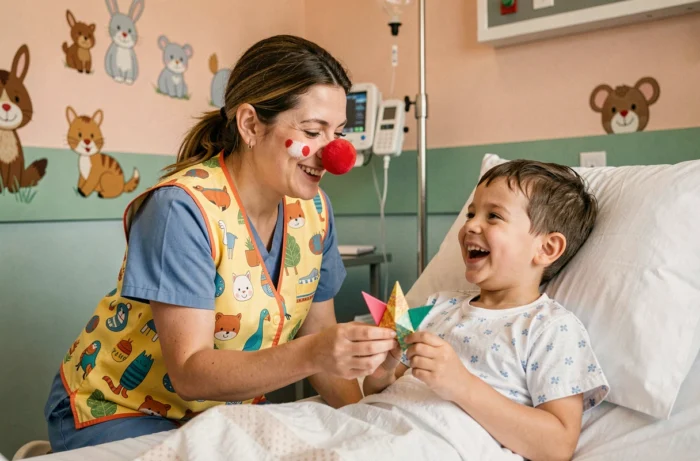
A hospitalized child remains a child. Their need to play, learn, and interact does not disappear behind the door of a pediatric ward. Initiatives aimed at preserving this daily life in a medicalized environment have diversified in recent years, going beyond the simple distribution of toys to include sensory, digital, and even musical devices directly linked to care protocols.
Sensory tools in hospital settings: beyond the classic toy
Most content on the well-being of hospitalized children focuses on toy drives and occasional activities. A rarely addressed angle concerns sensory tools adapted to hospital hygiene constraints. At the Jacques-Cœur hospital, sensory equipment has been installed even in recovery rooms, selected with safety and disinfection standards specific to these spaces in mind.
This choice is not trivial. A recovery room welcomes children in the post-operative phase, often disoriented and anxious. Offering tactile or visual stimuli calibrated for this precise moment changes the quality of awakening. The equipment must be cleanable between each patient without degrading, which excludes a large part of standard toys.
Associations active in this field, such as the one documented on souriresdenfants.be, contribute to this effort by coordinating actions designed to meet the realities of the hospital environment rather than a generic donation logic.
Secure tablets and educational robots in pediatrics
Digital technology is gradually entering hospital rooms, but not in just any form. At the Arcachon hospital, tablets have been installed in pediatric rooms, complemented by educational robots Miko and Buddy. The system, called PrimaKid, offers a free and secure internet connection to young patients.
The goal goes beyond entertainment. These devices provide access to educational games and age-appropriate content while maintaining a framework controlled by the healthcare teams. A robot like Buddy can interact with the child, ask questions, and suggest activities, breaking the isolation felt in a private room.
Why network security matters
A hospitalized child accessing the internet without filters is exposed to inappropriate content or excessive visual fatigue. The technical framework of the PrimaKid system addresses this constraint: paramedical teams maintain control over the time slots and types of content accessible. The digital tool becomes a complement to care, not a passive distraction.
Music integrated into neonatal care protocols
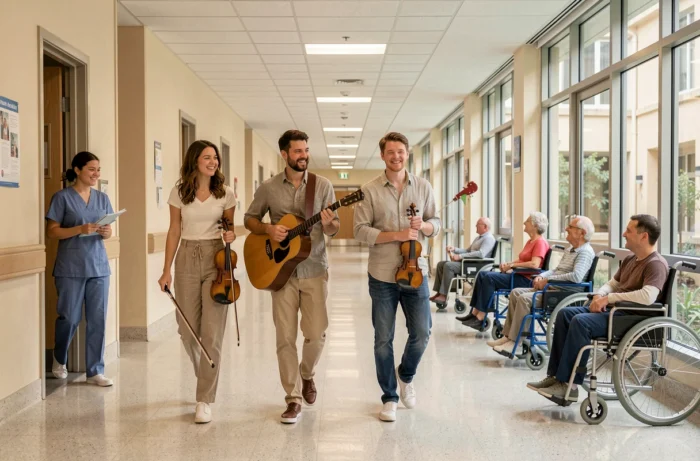
Music in a hospital setting is not limited to performances organized in reception halls. At the CHRU of Nancy, a singer from the Lorraine National Opera Choir performs every month in neonatal intensive care, directly at the bedside of the babies.
This approach is part of a care logic, not just entertainment. Bedside singing in neonatal intensive care is supervised by medical staff, who adjust the volume and duration according to each baby’s clinical condition.
Difference between musical entertainment and applied music therapy
Occasional musical entertainment brings joy, creates a collective moment, and breaks the routine. Music integrated into care protocols serves a measurable objective. Both approaches coexist in pediatric services, but they do not mobilize the same skills or the same participants.
In the case of Nancy, the artist works in coordination with the caregivers. She does not enter the intensive care unit as she would step onto a stage. This distinction is fundamental to understanding how solidarity actions in hospital settings are evolving towards more specialized forms.
Sustainable design of pediatric spaces
Some initiatives go beyond occasional interventions to physically transform the care environment. In Limoges, the Petits Princes association funded the development of a terrace in the pediatric service.
These projects respond to a simple observation: a child hospitalized for a long time needs a space that does not resemble a medical corridor. A terrace accessible from the service allows for going outside without leaving the hospital. A themed decor in a treatment room reduces apprehension before an examination.
- The design of outdoor spaces (terraces, gardens) offers a sensory break from the enclosed environment of the rooms, which can promote appetite and sleep
- Themed decor in treatment rooms serves as an active distraction during medical procedures, reducing the need for restraint
- Sustainable projects require close collaboration between associations, hospital architects, and healthcare teams to meet accessibility and hygiene standards
Maintaining family connections and supporting parents
The well-being of a hospitalized child also depends on the presence and emotional state of their parents. Digital solutions like the application developed by Choupidou allow distant relatives (grandparents, siblings) to maintain regular contact with the child, under the supervision of medical professionals. The maintained emotional bond reduces the child’s stress and facilitates their cooperation during care.
- Accommodation houses near hospitals prevent prolonged family separation, especially for families living far from the care center
- Secure video conferencing tools allow for a controlled virtual presence, adapted to the schedules and protocols of the service
- The psychological support for parents, still unevenly available depending on the facilities, directly influences the child’s experience of hospitalization
Solidarity initiatives in pediatrics are becoming more precise. They no longer just provide a toy or a show: they integrate into care pathways, transform spaces, and take into account the entire family unit. This growing specialization makes coordination between associations, medical teams, and families all the more necessary.