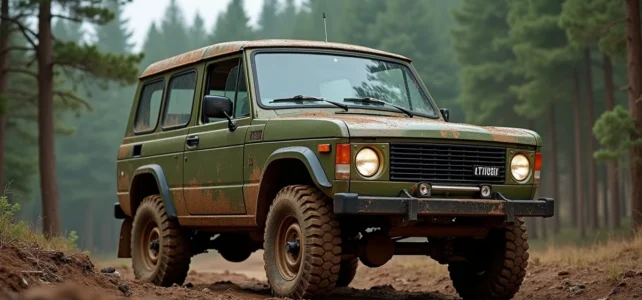
The Lada Niva 4×4 refers in 2026 to two distinct vehicles: the Niva Legend, which is still in production by AvtoVAZ until the end of the decade, and the new Niva developed on the CMF-B platform inherited from Renault. This coexistence creates a rare situation in the compact off-road market, where a buyer must choose between two generations sold simultaneously, with opposing mechanical philosophies.
Niva Legend or new Niva CMF-B: two vehicles under the same name
The Niva Legend retains a rugged architecture designed for pure off-roading. Permanent four-wheel drive, transfer case with low range, lockable central differential: this mechanical setup has no direct equivalent in the segment of new compact 4x4s sold at a comparable price.
The new Niva based on CMF-B shares its platform with the Dacia Duster. The approach is different: a more civilized compact SUV on the road, with significantly superior daily driving comfort, but off-road capability that is closer to a crossover than to an old-school off-roader.
To compare launch prices and standard equipment between these two approaches, the detailed grids compiling the prices of the new Lada Niva 2026 on Automobile Référence provide clarity before making a decision.
The choice between Legend and new Niva depends on actual usage. A vehicle intended for hunting, forest trails, or unmaintained agricultural paths will find in the Legend a mechanical robustness that is hard to match. For mixed road-country use, the new Niva on CMF-B offers a more versatile compromise.
DREAL homologation in Europe: the technical process to anticipate
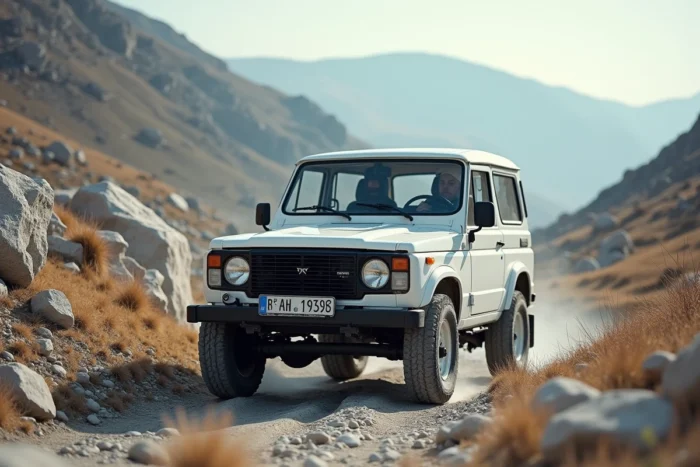
Buying a new Niva from Russia involves an individual homologation procedure with the DREAL (Regional Directorate for the Environment, Planning and Housing). This point conditions the feasibility of the project for a European buyer.
The Niva is no longer homologated for the European market since the break between Renault and AvtoVAZ. Each imported vehicle must therefore undergo an individual reception, with checks on emissions, passive safety, and compliance with current standards.
The checkpoints during this homologation cover several technical areas:
- Pollutant emission levels, which must comply with the Euro standard in effect at the time of import, which may require modifications to the exhaust system or the catalyst
- Passive safety devices (airbags, seatbelt anchors, structural resistance), whose absence or non-compliance leads to a systematic refusal
- Lighting and signaling, which must meet ECE regulations, sometimes requiring a complete replacement of the optics
- The anti-corrosion treatment of the chassis, a sensitive point on Nivas whose factory protection remains basic compared to European standards
The overall cost of this procedure (transport, compliance, taxes, DREAL passage) can represent a significant fraction of the vehicle’s purchase price itself. Neglecting this budget item skews any price comparison with an SUV bought from a dealership in France.
Permanently engaged transmission and transfer case: the technical advantage of the Niva off-road
Most compact SUVs on the market use an electrohydraulic coupler (Haldex type) to distribute torque between the axles. This system operates in front-wheel drive mode by default and only sends torque to the rear when a loss of traction is detected.
The Niva Legend operates differently. Its permanent all-wheel drive with transfer case continuously distributes torque between the two axles. The lockable central differential and short ratios provide constant traction in difficult terrain, without electronic latency.
This architecture explains why the Niva retains followers among professional users in rural areas. A forester, farmer, or hunter who regularly travels on muddy or snowy trails benefits from a predictable and mechanical behavior, without software intervention that might misinterpret the situation.
The downside of this simplicity: higher fuel consumption on the road, greater rolling noise, and rudimentary suspension comfort. On the highway, the Niva Legend shows its age compared to any modern SUV.
Corrosion of the Lada Niva chassis: the purchasing trap to check first
In the used market as well as for a new imported vehicle, the condition of the anti-corrosion treatment of the chassis determines the lifespan of the Niva. The protections applied at the factory fall below the standards that European buyers are accustomed to.
Critical areas to inspect
The side rails, wheel arches, and spring mounts concentrate most of the rust problems. On a used Niva a few years old, perforation in these areas makes repair economically questionable.
For a new imported vehicle, an additional anti-corrosion treatment performed by a specialist before it goes into circulation constitutes a coherent preventive investment. This item adds to the purchase and homologation budget, but it protects the vehicle’s residual value in the long term.
Availability of spare parts
The new Niva on the CMF-B platform benefits from access to common parts shared with the Dacia Duster (filters, brake pads, suspension components). The Niva Legend, on the other hand, requires sourcing through specialized networks, with sometimes long wait times for certain references.
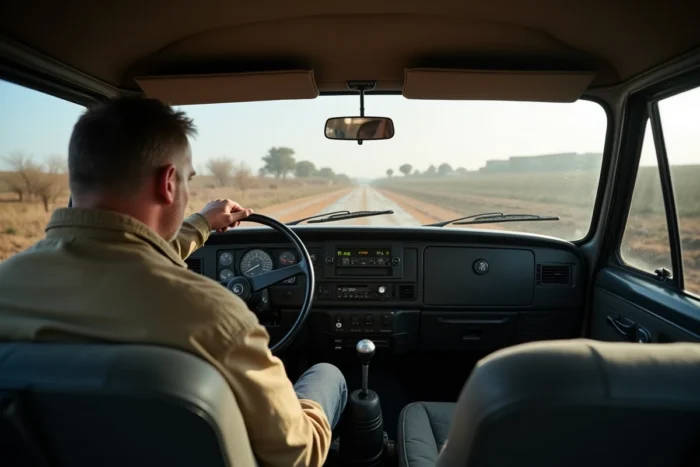
The Lada Niva remains a unique vehicle in the current automotive landscape. Its relevance in 2026 depends less on its gross price than on the total budget once homologation, anti-corrosion treatment, and parts supply are factored into the calculation. For regular and committed off-road use, few new vehicles offer such direct transmission at this price level.