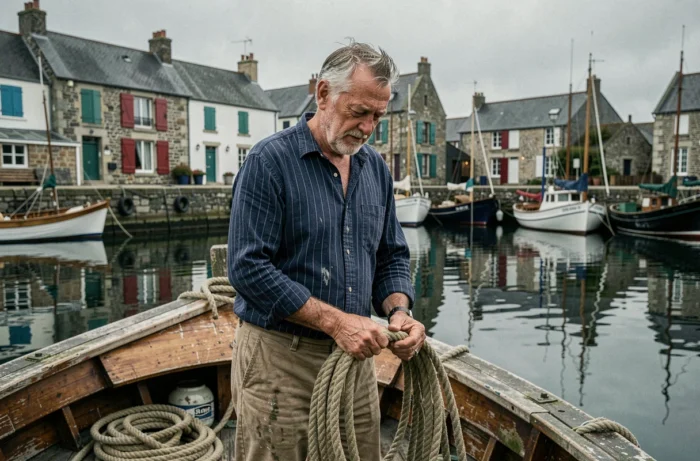
Brittany is not just a collection of photogenic spots. The region concentrates territorial dynamics that redefine how one stays there, between managing tourist flows, regulatory restrictions on the coastline, and changes in the rental market. Here, we offer a less conventional reading of what Brittany truly offers the discerning visitor.
Bivouacking and wild camping on the Breton coastline: restrictions to know
The image of Brittany where one pitches a tent facing the ocean largely belongs to the past. Bivouacking is prohibited on a large part of the Breton coastline, and municipal orders are multiplying to regulate outdoor activities.
Coastal municipalities like Tréveneuc explicitly prohibit bivouacking and wild camping on their territory. These restrictions are not limited to protected natural areas: they also affect zones that were previously tolerated by local authorities.
For a stay in nature, we recommend systematically checking local regulations before any departure. Natural camping areas provide a legal alternative, but their capacity remains limited during peak season. The resources available on breizheo.com help identify accommodations suitable for each type of stay in Brittany.
Tourist attendance in Brittany: trade-offs and de-seasonalization
Tourism professionals in Brittany describe a generally stable attendance but marked by tighter stay trade-offs than before. The gaps are widening between saturated coastal areas and under-exploited hinterlands.
The regional strategy has shifted. It is no longer just about promoting flagship sites. The priority is on de-seasonalization and diversifying destinations inland.
Morbihan and the hinterland: credible alternatives
Morbihan concentrates a dense heritage offer that is not limited to Carnac or the Quiberon peninsula. The villages of the hinterland, wooded valleys, and inland canals provide a radically different experience from the coastal strip.
Mid-week stays or those outside of July-August offer a significantly better value for money. Local hosts adjust their rates to attract clientele that is out of sync with peak attendance.
- The moors and forests of central Brittany allow for hikes without the pressure of the coastal GR34 trails, which are often congested in summer.
- Local producers’ markets operate year-round in the towns of Morbihan and inland Finistère, offering a more authentic terroir than in coastal areas.
- The canals of Brittany (Nantes-Brest, Ille-et-Rance canal) offer multi-day cycling or boating routes, with occupancy rates much lower than on the coasts.
Breton maritime heritage: lighthouses and sites under renovation
Breton lighthouses are among the most photographed monuments in France. Their actual accessibility is another matter. Several iconic lighthouses and maritime sites are undergoing renovations or temporary closures, making it necessary to check visiting conditions before planning an itinerary.
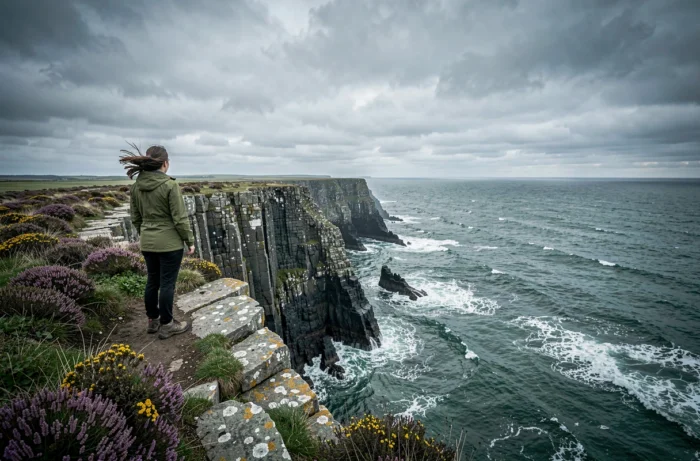
This situation reflects a broader issue: managing the coastline. The national integrated coastal management strategy 2025-2030 directly concerns the Breton coastline, where erosion is gradually changing access to certain sites.
Breton villages and built heritage
Labelled villages and character towns remain a highlight of the region. Locronan, Rochefort-en-Terre, or Pont-Aven are not just backdrops: they are places where vernacular granite architecture reflects specific construction know-how.
We observe that the quality of the experience largely depends on the timing of the visit. In high season, these villages lose some of their character under the influx of visitors. In low season, the low light and calm restore their true atmosphere.
Rental and accommodation in Brittany: pressure on real estate
The tourist rental market in Brittany is undergoing accelerated transformation. In Belle-Île-en-Mer, tourist accommodations have increased by more than twenty percent in one year, illustrating the pressure on island and coastal real estate.
This dynamic fuels a local debate on regulating second homes and furnished tourist rentals. The law of November 19, 2024, modifies the parameters for calculating the tourist population, which has direct consequences on municipal allocations and urban planning policies.
- Coastal municipalities are tightening their urban planning rules to limit the conversion of primary residences into seasonal rentals.
- Rental prices in high season on the south coast remain significantly higher than in the hinterland, with a gap that widens each year.
- Stays in rural gîtes or guest rooms in inland Finistère or Côtes-d’Armor offer a more financially accessible alternative, without sacrificing the quality of the Breton experience.
Breton terroir: beyond galettes and cider
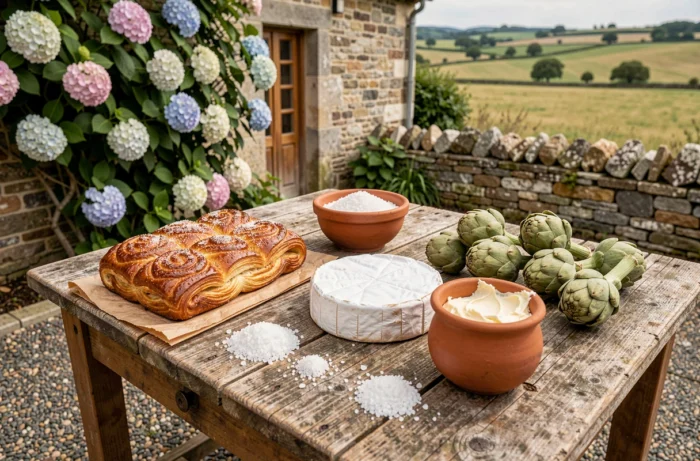
The Breton terroir is not limited to crêperies. The oyster farming sectors of the Gulf of Morbihan, edible seaweeds harvested on the north coast, artisanal cured meats, and local breweries make up a gastronomic ecosystem that is becoming more structured.
Weekly markets remain the best entry point. They allow for direct contact with producers and a concrete understanding of what the region produces, far from standardized distribution circuits.
Brittany deserves a more technical approach than just a simple checklist of places to visit. Regulatory constraints on the coastline, real estate pressure, and changes in attendance reshape the real conditions of the stay. Preparing a trip to Brittany means first understanding these dynamics before choosing a destination.