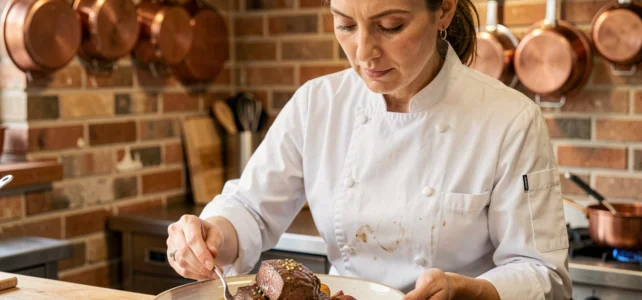
What criteria truly distinguish a successful everyday meal from a simple reheated dish? Everyday gastronomy is not just a collection of quick recipes or an exercise in high-end home cooking. It relies on concrete choices: selection of ingredients, balance between flavors and nutritional contributions, realistic preparation time. Understanding these parameters allows for transforming each homemade meal into a moment of measured pleasure.
Functional food and everyday cooking: what’s changing in the basket
Competitors list recipes by category (appetizers, main dishes, desserts) without addressing a recent shift. The SIAL Insights 2026 report documents a structuring of the food offer around specific health benefits: energy, digestion, cognitive performance. The choices of products for everyday cooking now incorporate functionality criteria (proteins, fibers, digestive health) that go beyond the simple “natural” or “homemade” reflex.
This shift modifies the composition of shopping baskets. There are more products rich in fibers, ferments, and ingredients associated with stress management or sleep quality. For the amateur cook, this means rethinking the base of their dishes: replacing refined grains with legumes, adding fermented seeds to a salad, integrating miso into an evening broth.
The goal is not to medicalize cooking but to identify ingredients that combine flavors and function. A meal built around a dish of coral lentils with turmeric, accompanied by roasted vegetables, ticks both boxes without extending preparation time.
To access the entire Gastronomie du Jour, recipes are categorized by type of dish and by season, making it easier to find inspiration suited to these new criteria.
Everyday recipes: comparison of time, cost, and nutritional value
The table below contrasts four families of common dishes. The qualitative data is based on documented trends in the SIAL 2026 analyses and observations from French recipe sites.
| Type of dish | Average preparation time | Relative cost | Nutritional density | Flavor potential |
|---|---|---|---|---|
| Homemade tomato sauce pasta | Short | Low | Medium | Medium (depends on herbs) |
| Legume salad | Short to medium | Low | High | High (varied textures) |
| Traditional stew (ragout, blanquette) | Long | Medium | High | Very high |
| Vegan bowl (grains, raw vegetables, sauce) | Medium | Medium | High | High (varied condiments) |
The legume salad and vegan bowl show a favorable time/nutritional value ratio. In contrast, the stew remains the one that develops the most flavor depth, thanks to slow cooking that concentrates flavors.
The choice of dish type depends on the day of the week. Evenings with time constraints naturally lean towards short formats. Weekends allow for cooking long recipes whose leftovers serve the next day.
Flavors and herbs: combinations that transform a simple dish
Everyday gastronomy relies less on technical complexity than on mastering a few flavor combinations. Three levers make the difference between a bland dish and a memorable one.
- Finishing acidity: a drizzle of lemon, a spoonful of rice vinegar, or a few drops of sumac on a dish of roasted vegetables enhances the whole without adding fat or salt
- Accessible umami: soy sauce, miso, grated parmesan, or tomato concentrate add flavor depth to simple recipes like vegetable soup or stir-fried rice
- Texture contrast: adding toasted seeds, fried onions, or pickles to a soft dish (puree, curry, velouté) creates additional sensory interest
These techniques require neither special equipment nor additional preparation time. They apply to the majority of homemade recipes, from vegan dishes to traditional stews.
Underused spices and condiments in France
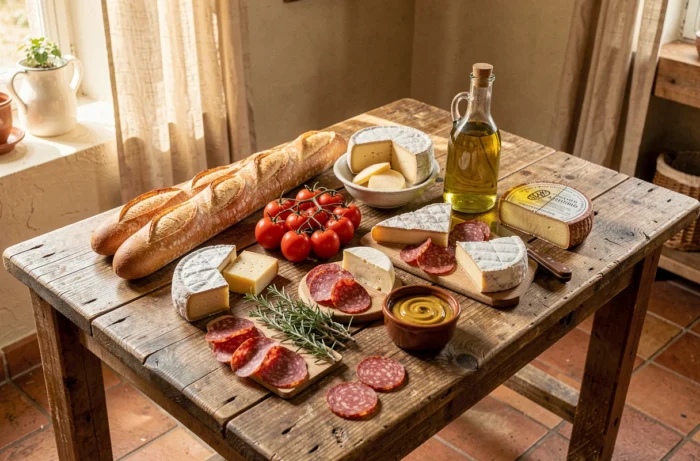
Za’atar (a mix of thyme, sumac, and sesame), black sesame paste, or Korean gochujang remain scarce in French kitchens. Their integration into everyday dishes does not require a specific recipe: a spoonful of gochujang in a vinaigrette, za’atar sprinkled on toasted avocado, black sesame paste mixed with yogurt for dessert.
These condiments can be stored for several months and offer a flavor/effort ratio among the highest in everyday cooking.
Meal planning and reducing food waste
The issue of waste increasingly structures the way of cooking daily in France. Planning meals over three to four days allows for buying only the necessary quantities and reusing ingredients from one dish to another.
A concrete example: a roast chicken on Sunday provides the base for a broth on Monday (carcass and trimmings), a salad on Tuesday (leftover meat), and a risotto on Wednesday (broth). Four distinct meals from a single main purchase.
This logic also applies to vegetables. Radish greens become a pesto, broccoli stems a velouté, carrot peels an aromatic broth. Everyday gastronomy gains in flavor when it exploits the entirety of products rather than just their noble parts.
Batch cooking and modular recipes
Batch cooking involves preparing the bases for several meals of the week in a single session. Specifically, this means cooking a grain (rice, quinoa), a legume (chickpeas, lentils), and two or three vegetables simultaneously, then assembling everything differently each day.
- Monday: bowl with rice, roasted chickpeas, raw vegetables, and tahini sauce
- Tuesday: warm lentil salad, grilled vegetables, and miso vinaigrette
- Wednesday: wrap with quinoa, remaining vegetables, and homemade hummus
Batch cooking reduces time spent in the kitchen to two weekly sessions while maintaining a diversity of flavors and textures in meals.
Everyday gastronomy requires neither a substantial budget nor chef skills. It relies on thoughtful ingredient choices, a few well-chosen condiments, and an organization that transforms leftovers into new recipes. The SIAL Insights 2026 report confirms that this functional and gourmet approach aligns with the direction taken by French consumers in their kitchens.